Simulate every customer. Optimize every offer.
What if you could ask every customer what it would take?
Emli gets you there. It builds an AI persona of every customer in your database and simulates how each one responds, so you know how a campaign plays out before you spend a dollar.
The right offer for every customer. Including no offer at all.
10,000 lapsed customers
Dan YamamotoNo offer
I was coming back anyway. Spending on me changes nothing.
3,051 customers need no offer.
SubscriptionsE-commerceMarketplacesLoyalty
Emli’s expertise, your control.
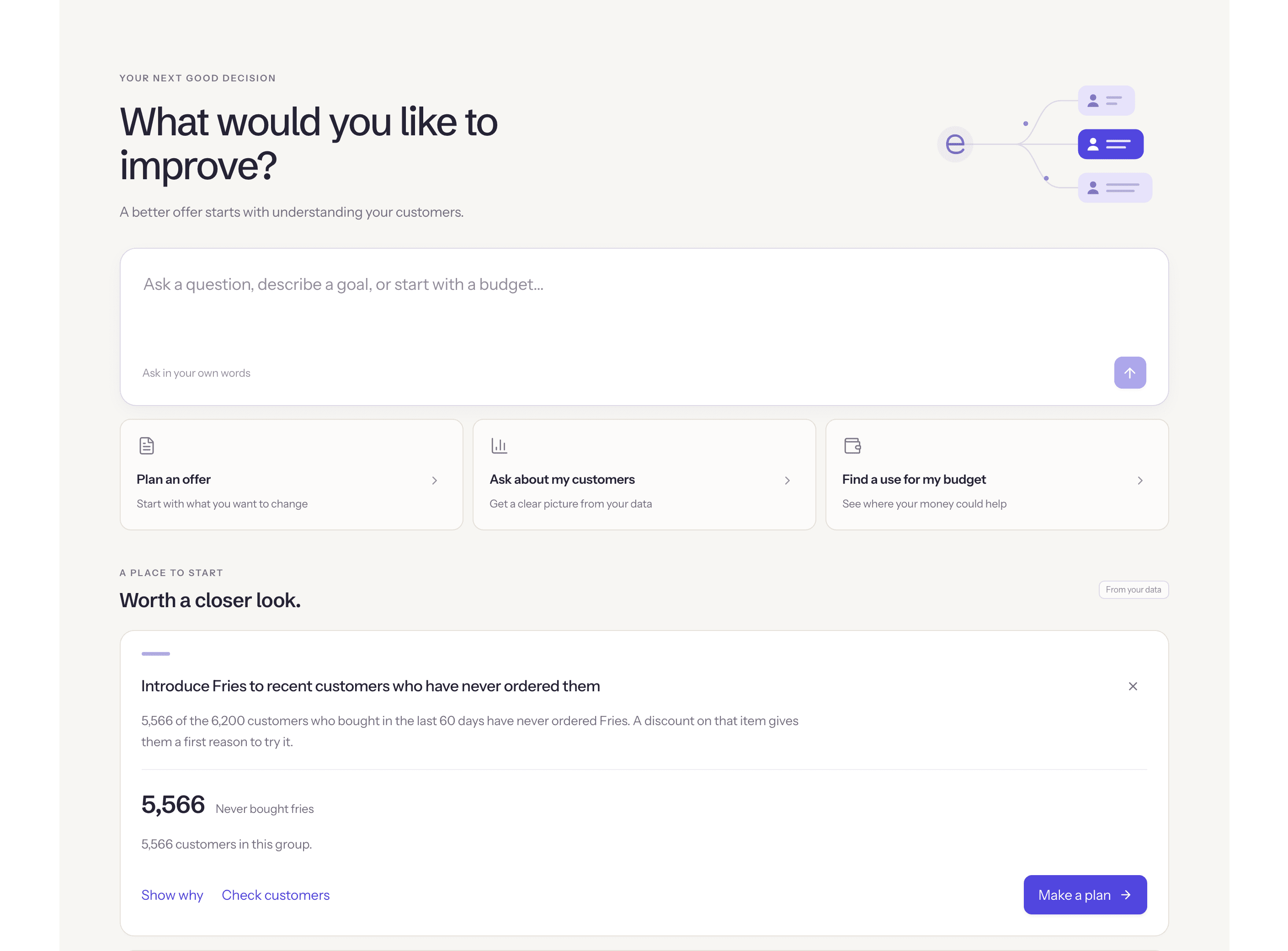
Ask about your customers, describe a goal, or start with a budget. Emli turns the conversation into a plan for every customer.
Emli finds opportunities in your customer data and brings them to you. Turn a promising audience into a personalized offer plan in the same conversation.
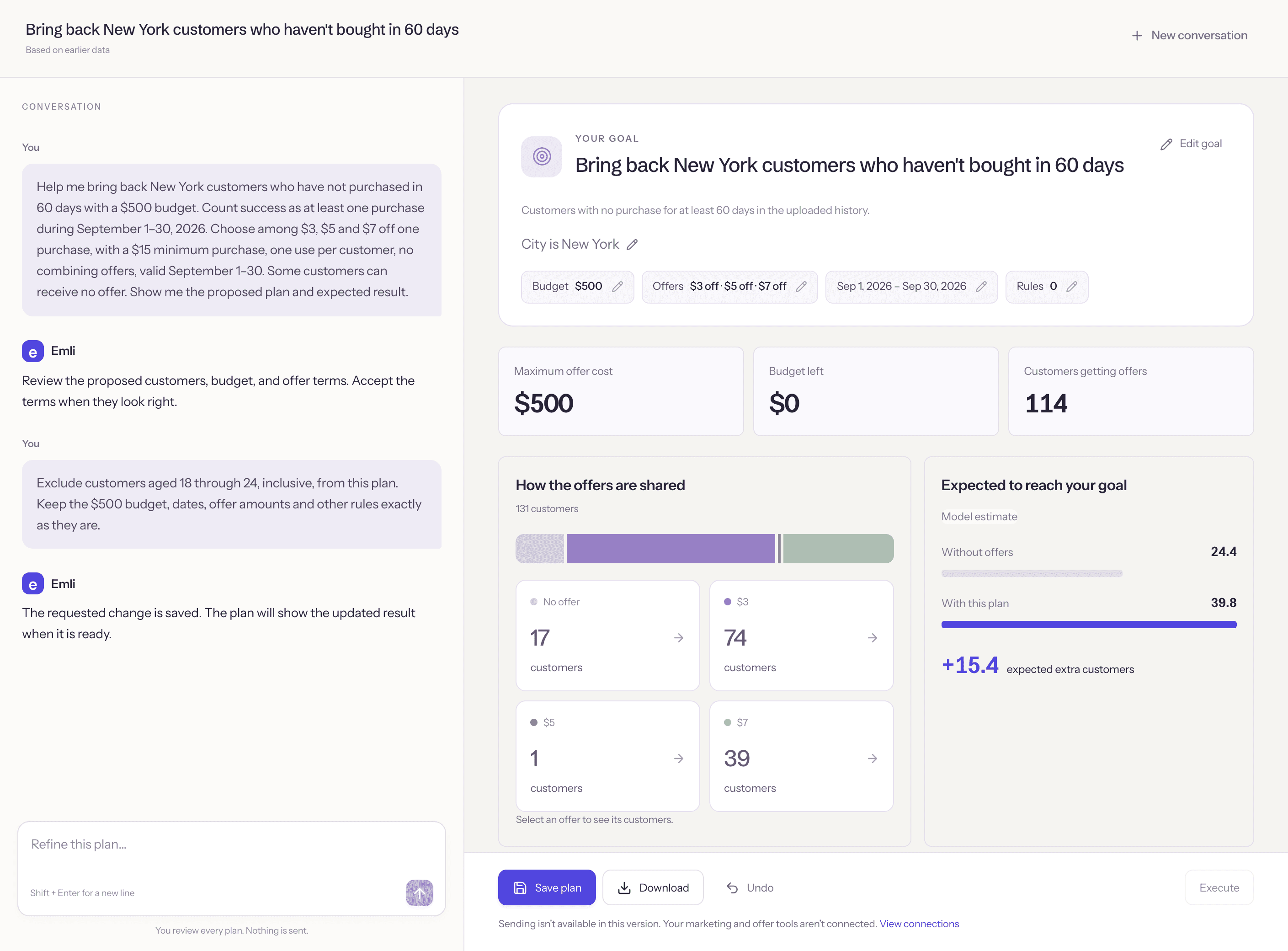
Set the goal, budget and guardrails. Emli shows the offer for every customer and the expected impact, with room to refine every decision.
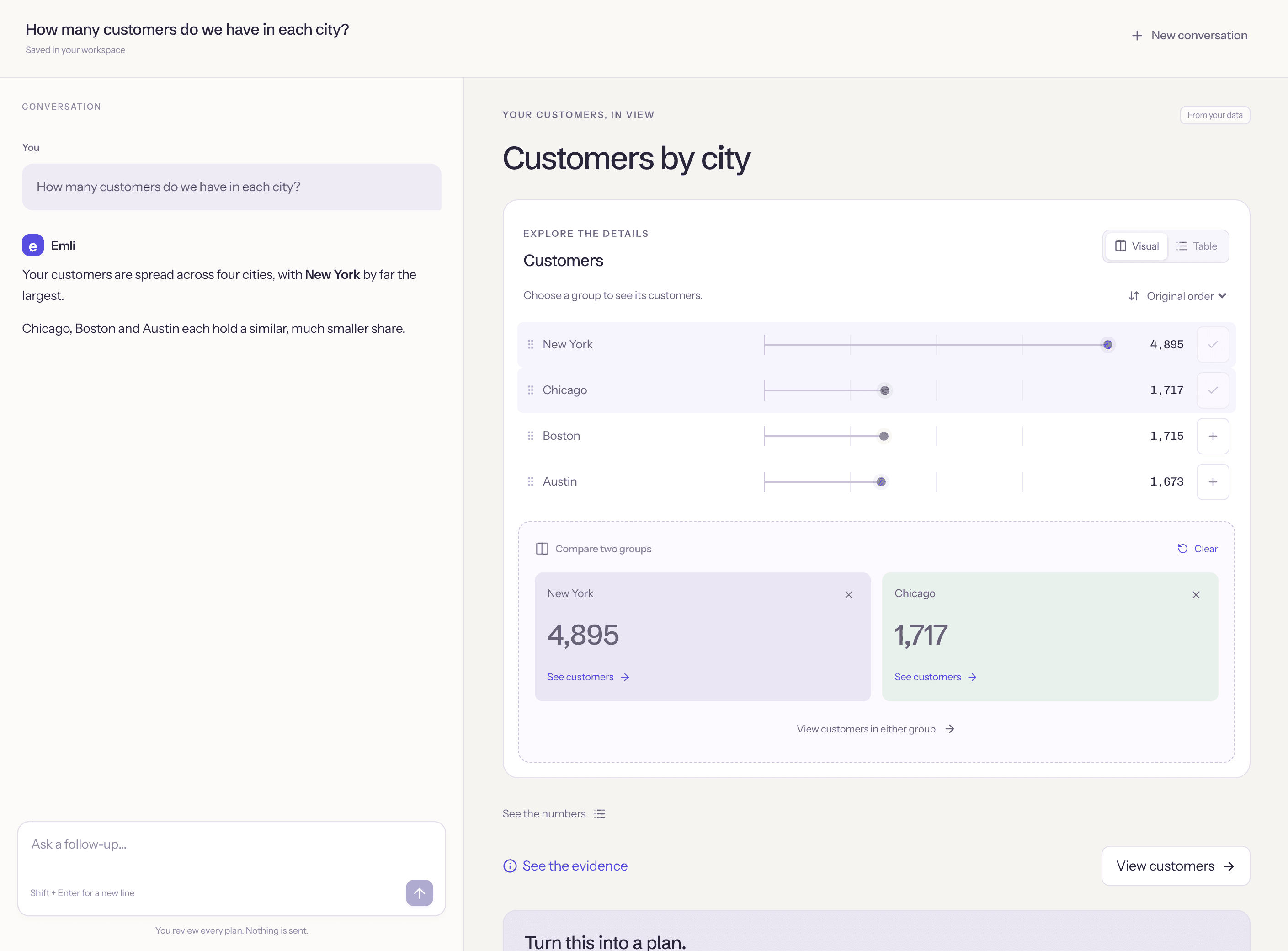
Ask a question and get a clear picture of your customers. Compare groups, explore the numbers and open the people behind each result.
One discount, three different answers.
Emli builds a persona for every customer from their past behaviour, then simulates how they would individually respond to potential offers. Move the slider and watch three of them respond differently.
At 30% off: Anna: Not enough. Roger: Overpaying. Marco: Wasted.
Anna, 18
Cash-strapped student
Joined on a promo, takes almost every offer, left two months ago.
“Nowhere near. Price is the only thing I look at.”
60%Needed to returnNot enough
They do not respond until 60%.
Roger, 61
Retired trader
Six years a subscriber, has never once used a discount.
“Yes, though you did not need to go that far.”
10%Needed to returnOverpaying
10% would have done it.
Marco, 35
Freelance journalist
Left last week, and has drifted back on his own twice before.
“I was coming back anyway. You just paid me to do it.”
0%Already returningWasted
They were coming back without an offer.
Emli Campaign Studio
One-to-one marketing.
All in your control.
Describe the campaign, the budget and the guardrails. Emli designs a plan with the exact offer for every customer. You review it, refine it and decide when it goes out.
From individual offers to personalized journeys, Emli brings customer understanding into every decision. Start with the history you already have. Improve with every campaign.
See Campaign StudioBring back lapsed customers.
The right offer. The right moment. The right message.
Where Emli sits in your stack.
Your customer data. Your campaign tools.
Export Emli’s offer plan into your existing workflow.
Your customer data
Transactions, behaviour
and campaign history
Understand. Simulate. Optimize.
Your campaign tools
Braze, Klaviyo, Iterable
and Salesforce
Start read-only
Keep your existing tools
Stay in control of every plan
Start read-only. Find your next growth opportunity.
Show Emli your customer data and the goal you have in mind. See the opportunities, explore the trade-offs, and build a plan around your budget.
This is money you are already spending. Emli just makes it work harder.